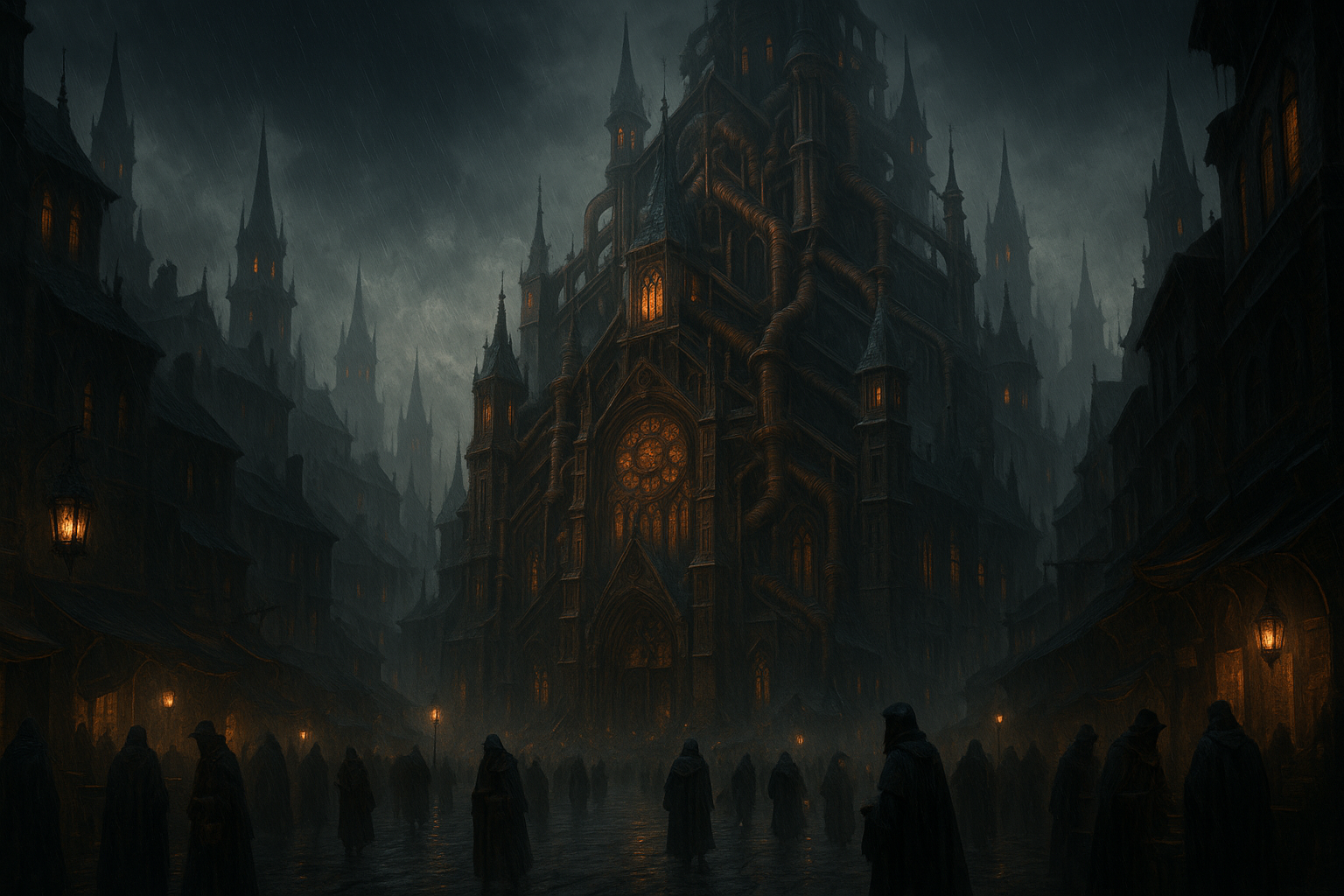
"In Dathmor, death is not the end—it is merely a change of currency."
Domain Type: Gothic metropolis
Population: ~50,000 (living), countless more (undead)
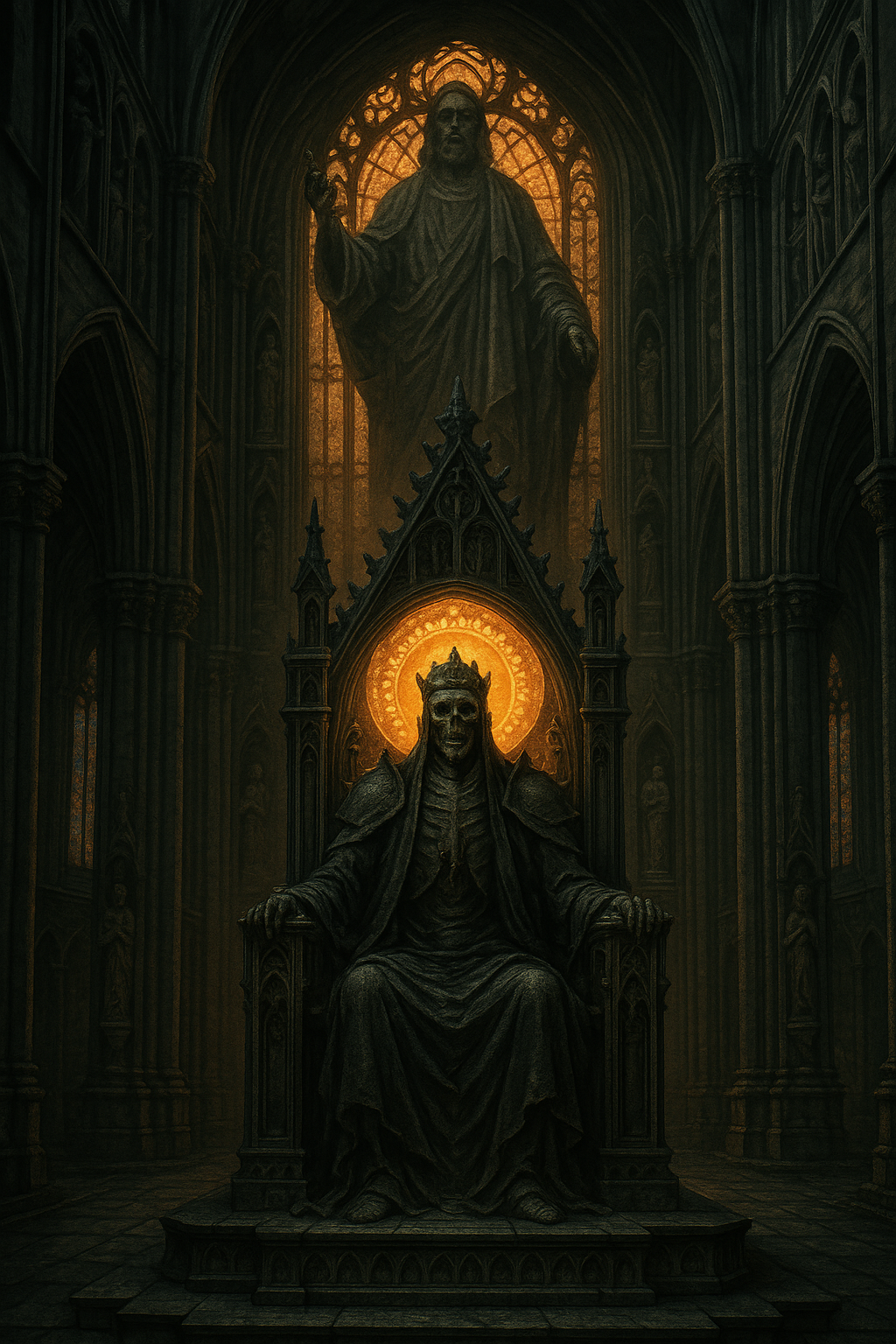
Ruler: Saint Carmael the Undying
Overview
Dathmor is the largest and most powerful Domain—a massive gothic city built around a dead Veil Engine that has been converted into an enormous cathedral. The city is renowned (and feared) for three things: its undead saint-ruler, its acceptance of necromancy, and its thriving soul trade.
The rain in Dathmor is warm and smells of copper. Locals say it contains trace amounts of blood from the original sacrifice used to power the Veil Engine.
Culture & Society
The Living and the Dead: Dathmor does not distinguish strongly between life and death. The city's founder, Saint Carmael, achieved a form of "holy undeath" three centuries ago and continues to rule. Many citizens view becoming undead as a form of immortality, and necromancy is legal and regulated.
Soul Trade: Dathmor's economy runs partially on soul gems. The poor sell fragments of their souls for food, shelter, or medicine. The wealthy buy complete souls to power relics, fuel spells, or even achieve immortality. This practice is deeply controversial elsewhere but normalized in Dathmor.
Social Classes:
- The Eternal Faithful: Undead citizens preserved through necromancy
- The Merchant Houses: Wealthy families who control the soul trade
- The Living Poor: Those who haven't yet sold their souls—or have, and regret it
Key Locations
The Grand Cathedral: Built around the dead Veil Engine. Saint Carmael "resides" here, speaking through the Brass Choir—mechanical constructs that deliver sermons in eerie, harmonized voices.
The Soul Markets: Open-air markets where soul gems are bought and sold. Heavily regulated by the Church. Deals must be witnessed and recorded.
The Catacombs: Miles of tunnels beneath the city where the "preserved" faithful rest in alcoves, awaiting resurrection or reanimation. Deeper levels are sealed and forbidden—rumored to connect to the Veil Engine's buried mechanisms.
The Merchant Quarter: Opulent district where the wealthiest families live. Mansions powered by soul-fueled automatons, gardens kept alive through sacrificial magic.
The Hollows: Slums where the soul-depleted live. These individuals have sold too much of their essence and now exist as empty husks—functional but emotionless, easily exploited.
What Adventurers Need to Know
Soul Trade is Legal: Selling animal souls or willing humanoid souls is legal. Forced soul theft is punishable by having your own soul extracted and sold.
Necromancy is Regulated: Raising undead requires a Church permit. Unlicensed necromancy is illegal but common in the Catacombs' deeper levels.
The Church Controls Everything: Saint Carmael's Church owns the Brass Choir, regulates the soul trade, and maintains order. Defying the Church is dangerous.
Don't Look at the Engine: The dead Veil Engine at the cathedral's heart is visible through massive stained-glass windows. Staring at it too long causes nightmares, visions, or madness. Locals avert their eyes.
Grafts are Common: Dathmor has many Cog Ascendant members. Grafted individuals are not unusual.
Adventure Opportunities
- Investigate a soul theft ring operating in the Soul Markets
- Explore the sealed levels of the Catacombs
- Uncover heretical cults challenging Saint Carmael's authority
- Broker deals between merchant houses
- Rescue someone whose soul was sold against their will
- Investigate reports of the dead Veil Engine "waking up"
Survival Tips
- Respect the Church: Don't question Saint Carmael openly
- Protect Your Soul: Don't sign contracts you don't understand
- Beware the Hollows: The soul-depleted are often desperate and unpredictable
- Avoid the Deep Catacombs: Many who descend don't return